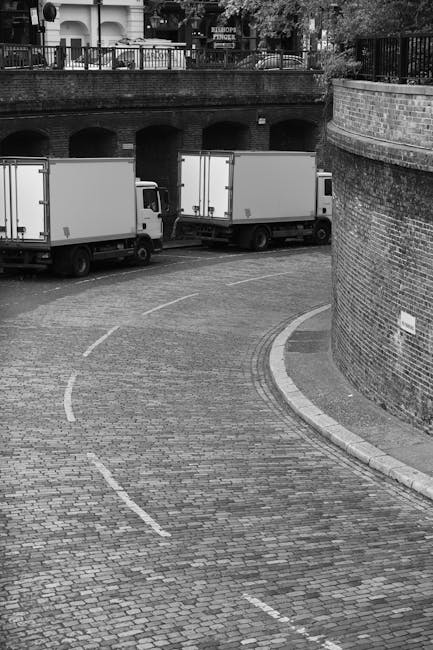
Narrow street removals in Ilford access problems and solutions
Posted on 30/06/2026

Narrow Street Removals in Ilford: Access Problems and Solutions
Moving house or office is stressful enough without a van that cannot get near the front door. If you are dealing with narrow street removals in Ilford access problems and solutions, you already know the awkward bits: parked cars, tight bends, low-hanging branches, bin day, one-way turns, and that sinking feeling when the driver says, "We may need to park further down." Truth be told, a lot of local moves are won or lost before a single box is lifted.
This guide breaks down the real access issues you are likely to face in Ilford, why they matter, and how to solve them without turning moving day into a comedy of errors. We will look at planning, vehicle choice, loading strategy, communication, and the practical steps that make narrow-street moves smoother. If you want a local service overview while you read, you can also look at the services overview and the company's about us page for more background.
Why Narrow Street Removals in Ilford Matters
Narrow streets change the whole shape of a move. On a normal road, the van parks, the crew unloads, and everything flows. On a cramped Ilford street, the move can slow down before it starts. The problem is not just inconvenience. Access affects labour time, parking position, lifting distance, risk of damage, and even whether larger furniture can be removed safely at all.
Ilford has a mix of terraced roads, older residential streets, flats with limited forecourt space, and busier through-routes where parking is already competitive. Add schools, local traffic, corner junctions, delivery vans, and the usual London "just for a minute" parking habits, and you have a fairly typical access challenge. You notice it most when a moving vehicle arrives and there is nowhere obvious to stop. That one detail can ripple through the rest of the day.
Access problems matter because they affect more than speed. They affect safety. A longer carry means more chance of scraping walls, dropping items on a kerb, or blocking pedestrians. It also matters for cost. The extra time spent shuttling items, waiting for a space, or manually carrying furniture from further away often changes the size of the job. In our experience, the best narrow-street moves are the ones that were planned as access jobs first and removals second.
If you are moving from or to a flat, or you are comparing options for a smaller home move, the local pages for flat removals in Ilford and house removals in Ilford are useful places to understand how the service is usually structured.
How Narrow Street Removals in Ilford Access Problems and Solutions Works
At its core, the process is simple: identify the access issue before moving day and match the removal plan to the street, property, and load. That sounds obvious, but a surprising number of problems come from assuming a standard van can just pull up outside. On a narrow street, the plan usually shifts around one of four things: vehicle size, parking position, loading route, or timing.
A good mover will look at the address and ask the right questions. Is the street single-file or two-way? Are there parking bays, yellow lines, permit restrictions, or resident-only controls? Can a larger van turn at the end, or will it need to reverse carefully? Is there a lift in the building, or are there stairs and tight landings? Can the front door open wide enough for bulky furniture to pass? These are not small details. They shape the whole job.
The usual solutions are practical rather than dramatic. A smaller vehicle may be better than a large removal lorry. Two trips may be easier than one. A shuttle system can be used, where the van parks in a safer spot and items are carried or trolleyed over a short distance. For some jobs, the team may arrive earlier to secure parking before the road gets busy. And in a few cases, access planning means using specialist handling for oversized pieces, such as a piano or large wardrobe. If that is your situation, the dedicated piano removals service shows the kind of care larger items need.
There is a very human side to this too. Sometimes the moving team arrives, takes one look at the street, and quietly adjusts. No fuss, no drama. That flexibility is often what turns a potentially stressful move into a manageable one. Rather a lot depends on that calm judgement.
Key Benefits and Practical Advantages
When access is handled properly, narrow-street removals become much less chaotic. The first benefit is obvious: fewer delays. If the team already knows where the van will park, how long the carry is, and which items need careful handling, the day moves more smoothly from the first box to the last chair.
The second benefit is reduced risk. Long carries across uneven pavements, parked cars, or tight hallways increase the chance of damage. A planned access route lets the crew protect your furniture and the property itself more effectively. That matters with door frames, wall corners, staircase bannisters, and polished floors. Nobody wants to spend the first evening in the new place staring at scuff marks.
The third benefit is better cost control. Access issues can add time, and time is part of the job. When the crew knows in advance that parking will be awkward or the van cannot sit outside the door, they can quote more accurately and choose the right size of vehicle. That is one reason the company's pricing and quotes page is worth reviewing before you book.
There is also a simple peace-of-mind benefit. If you have already thought through the awkward bits, you stop worrying about the awkward bits. A lot of moving stress comes from uncertainty. Clear access planning cuts that right down.
- Shorter load and unload times when parking is planned well
- Lower chance of property damage during long carries
- Better protection for fragile and bulky items
- More realistic scheduling and pricing
- Less disruption to neighbours, pedestrians, and traffic
Who This Is For and When It Makes Sense
This kind of planning is useful for more people than you might think. It is not just for busy high streets or old terraced roads. It applies to flat moves, student moves, family homes, office relocation, and urgent same-day moves where time pressure makes access even more important.
You will especially benefit from a narrow-street approach if:
- your road is too tight for two vehicles to pass comfortably
- parking outside your property is limited or heavily controlled
- you live in a converted house, mansion block, or upper-floor flat
- you have large furniture, appliances, or fragile items
- you are moving at a busy time of day
- you are in a rush and need a smoother, quicker handover
Students and renters often overlook access until the last minute. Then suddenly there is a sofa that will not fit down the stairwell, or a van that cannot wait outside because the road is fully lined with parked cars. If that sounds familiar, the student removals option can be a sensible fit, especially for lighter but time-sensitive jobs.
Office customers need similar planning. Small business moves often happen in roads where loading space is tight and deliveries already compete for the kerb. In those cases, the more detailed your access notes, the easier the relocation is likely to be. If your move has both tight access and a deadline, the office removals page is relevant too.
Step-by-Step Guidance
Here is a practical way to handle a narrow street move in Ilford without overcomplicating it.
-
Survey the access before booking.
Stand outside the property and look at the road with moving day in mind. Can a van stop safely? Is there enough room to open doors and load? Are there cars always parked tightly along both sides? Small observation, big difference.
-
Measure the awkward items.
Measure sofas, beds, wardrobes, and appliances. It is not glamorous, but it saves a lot of trouble. If you know a wardrobe will need to be dismantled, say so early. Same with anything unusually heavy or delicate.
-
Share access details clearly.
Tell the mover about steps, narrow hallways, keypads, lifts, resident permits, and any road restrictions. If the van needs to be parked around the corner, say that plainly. Clear facts are better than hopeful guesses.
-
Choose the right vehicle size.
A smaller van can sometimes beat a bigger one because it can get closer and turn more easily. On a tight street, that can save time and reduce risk. It is not about looking impressive; it is about getting the job done.
-
Plan the loading order.
Load the items you will need least often first, then keep essentials or fragile items accessible. If a shuttle is needed, group items by room so the crew can move efficiently rather than hopping back and forth. That back-and-forth really adds up.
-
Build in a little buffer time.
Traffic, parking, and building access always take longer than people expect. Even ten or fifteen minutes of margin can save a lot of tension. You do not want to be carrying boxes while watching the clock like a hawk.
If you are still at the planning stage, the company's man with a van in Ilford and removal van pages can help you think through which service type suits a smaller or more access-heavy move.
Expert Tips for Better Results
After you have handled a few tricky streets, you start noticing patterns. The right plan is rarely the most complicated one. It is the one that fits the road.
Tip 1: Photograph the access point. A quick photo of the street, parking layout, building entrance, and any loading pinch points can be useful. It helps the mover understand the scene before arriving. A picture really can do some heavy lifting here.
Tip 2: Time the move sensibly. Early morning is often calmer than mid-morning in busy local roads, especially where school runs and commuter parking overlap. That does not guarantee easy access, of course, but it can help.
Tip 3: Break down what can be broken down. Flat-pack items, bed frames, and some wardrobe sections are easier to move when dismantled. If your access is tight, reducing bulk pays off more than you might expect.
Tip 4: Keep a "first access" box separate. Put keys, documents, chargers, tea bags, medication, and a couple of essentials in one clearly labelled box. When access is awkward, the first hour of the day can feel disorganised. This little box keeps the important bits close.
Tip 5: Ask about handling and insurance before the day. A professional move should include sensible care for your items and property. If you want to know more about service expectations, the insurance and safety page is worth a look.
One slightly underrated tactic: tell neighbours if a van will need a bit of extra space. Not every move needs a social briefing, but a friendly heads-up can prevent that awkward "who blocked the road?" moment. We all know that moment.

Common Mistakes to Avoid
The biggest mistake is assuming the access problem will sort itself out on the day. It usually does not. Roads do not magically widen, and parking spaces do not appear out of thin air. If the street is tight, treat that as a key part of the move from the start.
Another common issue is booking the wrong vehicle. Bigger is not always better. A large van may seem efficient, but if it cannot get near the property, you lose that advantage quickly. A smaller, more manoeuvrable vehicle can be far more practical.
People also underestimate how much time is lost when items are not prepared. If wardrobes still need emptying, if boxes are loosely taped, or if hallways are cluttered, the crew cannot work efficiently. The road may be the obvious problem, but internal prep matters just as much.
Other mistakes worth avoiding:
- not checking whether parking permits are needed
- leaving reserve plans until moving day
- forgetting to mention stairs, lifts, or tight corners
- packing fragile items without enough protection
- assuming access at one property will be the same at the other
For some customers, hidden costs are also part of the mistake mix. A move that starts as "simple" can become more expensive if the access is worse than expected. Reading advice like how locals avoid hidden fees in Ilford removals can help you spot those risks early.
Tools, Resources and Recommendations
You do not need specialist equipment for every move, but a few practical tools make a real difference in narrow streets. Trolleys, furniture blankets, straps, and proper packing materials all help reduce strain and protect items. For multi-item moves, wrapping and labelling are especially useful, because nobody wants to play "which box has the kettle?" at 8 a.m.
Good packing materials matter more when carrying distance increases. If the van cannot stop right outside, your items may be moved over kerbs, pavements, or uneven ground, so boxes need to hold their shape. The pages for packing and boxes in Ilford and package and boxes are useful if you are trying to get the packing side sorted properly.
Useful moving resources on the same site also include:
- general removals in Ilford for broader moving support
- removal services in Ilford if you want a fuller service
- removal companies in Ilford for service comparison
- same-day removals in Ilford for urgent timing pressures
- storage option if the move needs staging or delay handling
And if you want to understand the company's approach to wider service delivery, the recycling and sustainability page can be helpful, especially if you are clearing unwanted furniture or packing waste as part of the move.
Law, Compliance, Standards, or Best Practice
For narrow street removals, compliance is mostly about sensible, lawful parking and safe handling. In London, that means paying attention to local parking restrictions, loading rules, yellow lines, resident permits, and any time-based restrictions that apply to the street. The exact rules depend on the location, so they should be checked for the specific address rather than guessed. That part matters a lot.
Best practice also includes manual handling safety. Heavy lifting should be planned, not improvised. Good technique, clear walkways, proper footwear, and the right equipment reduce the chance of injury. If a stairwell is too tight or a sofa is too awkward, the right answer is not to force it. It is to adjust the method. Simple, really.
Professional movers should also be able to explain how they protect your items and property. That might include wrapping, corner protection, load securing, and careful route planning. A trustworthy company will not oversell certainty. Sometimes access looks fine until the van arrives. A careful mover will say that plainly and adjust the plan rather than pretending everything is easy.
You may also want to read practical policy pages like health and safety policy, terms and conditions, and privacy policy if you are comparing service providers and want to understand how they operate.
Options, Methods, or Comparison Table
Different access problems need different answers. Here is a simple comparison to help you think it through.
| Method | Best for | Advantages | Trade-offs |
|---|---|---|---|
| Large van close to the door | Wide roads with decent parking | Fast loading, fewer trips | Not always possible on narrow Ilford streets |
| Smaller van with closer access | Tight streets and limited turning space | Better manoeuvrability, easier parking | May need extra trips for larger loads |
| Shuttle carry from a nearby parking point | Roads with no safe front-door parking | Flexible, practical, often safer | Longer labour time, more carrying distance |
| Full service move with disassembly | Bulky furniture and awkward staircases | Less strain on the customer, better protection | Needs more planning and potentially more time |
To be fair, there is no "best" option on paper. The best method is the one that matches the road, the building, and the size of your load. If you are unsure, a local move assessment is usually more useful than trying to force the biggest vehicle into the tightest lane.
Case Study or Real-World Example
Picture a typical Ilford move from an upper-floor flat on a narrow residential street. The road is lined with parked cars on both sides, the pavement is narrow, and there is no proper loading bay. The customer has a three-seater sofa, a bed frame, several boxes, and a couple of fragile items. On paper, nothing extreme. In practice, it is the sort of move where small decisions matter.
The planning starts with one simple question: where can the van stop safely? Rather than trying to sit directly outside the building, the team identifies a point a short walk away where the vehicle can park without blocking access. The customer is told in advance that a short carry will be needed. Fragile items are packed first, the sofa is checked for dismantling, and the route from flat to van is cleared before the first lift.
What made the move work was not special equipment. It was sequence. The team loaded the awkward items while the street was quieter, kept a clear path on the stairwell, and used trolleys for the heaviest boxes. The result? Less friction, fewer pauses, and no scrambling for a parking plan halfway through the job. Nothing flashy. Just good coordination.
That is the real lesson with narrow-street removals in Ilford. The move becomes easier when the access problem is treated as part of the move rather than a surprise at the door.
Practical Checklist
Use this checklist before moving day. It is simple, but it saves headaches.
- Confirm the exact pickup and drop-off addresses
- Check whether the street has parking restrictions or permit rules
- Measure bulky furniture and note anything that may need dismantling
- Tell the mover about stairs, lifts, narrow halls, and tight corners
- Decide whether a smaller van might be more practical than a larger one
- Prepare a clear route from the front door to the vehicle
- Pack fragile items securely and label them clearly
- Set aside essentials for the first day and keep them easy to reach
- Let neighbours know if access may briefly be affected
- Check the booking details, timing, and any extra services you may need
If your move is urgent, the same-day removals in Ilford page is the right place to start. And if you are still comparing local moving stories or practical updates, the Ilford Station man and van tips and Cranbrook Road parking advice posts offer useful local perspective.
Conclusion
Narrow street removals in Ilford are not difficult because the move is impossible. They are difficult because access changes the rules. Once you accept that, the whole process becomes easier to manage. The answer is rarely more panic or a bigger vehicle. It is usually better planning, clearer communication, and a move plan that fits the street rather than fighting it.
Whether you are moving from a flat, a family house, or a small office, the same principles apply: measure the load, understand the road, prepare the access, and give yourself a little breathing room. Do that, and the day tends to feel much calmer. Not perfect. Just calmer. And sometimes that is exactly what you need.
Get a free quote today and see how much you can save.
For more background on the company and the way it works with local customers, you can also read the testimonials section, browse the blog, or use the contact section when you are ready to talk through access details.